
How to build a UGC portfolio that brands choose
I'm the one who opens portfolios and picks the creators for my campaigns. What I look at first and what makes me move on to the next portfolio.
I chose every one of the more than 100 Portuguese creators in my network myself, and for each UGC campaign I choose again, from among them, the ones who suit that brand's product, almost always in the same way: I open the portfolio and press play on the first video. UGC, short for user-generated content, means the videos a creator films with the product in hand for the brand to use in its ads, and your portfolio is where you show the ones you've already made. I've already written here about the first videos worth filming and about the mistakes that stop a video from selling, and this article covers the step in between, which is putting those videos somewhere that someone like me opens, goes through in one go and closes knowing whether you're the right creator.
The first few seconds of each video
I don't watch every video to the end, and neither do the people who see brands' ads, so it's the first few seconds that decide whether I stay. TikTok advises brands to get the main idea of an ad across in the first three seconds, and that's what I look for: the product, the problem or the result right at the start. Put your best video first, because that's where I begin. For each video, also choose a cover, the image people see before they press play, with your face and the product in view, because a dark or blurry cover makes a good video look worse than it is.
Talking to camera without sounding like you're reading
When a creator speaks, I want to hear a person telling me about something that happened to them, and I can tell straight away when their eyes are following text on the screen. What works is knowing the few ideas the video has to get across and saying them in your own words, at the pace of a voice note to a friend, looking at the lens and not at your own face. Tripping over a word or laughing halfway through won't make me skip you, and it's often what makes the video believable. What makes me wary is a voice that stays on one note without a breath, like a radio ad read by someone who's never touched the product.
Light, sound and the product in your hands
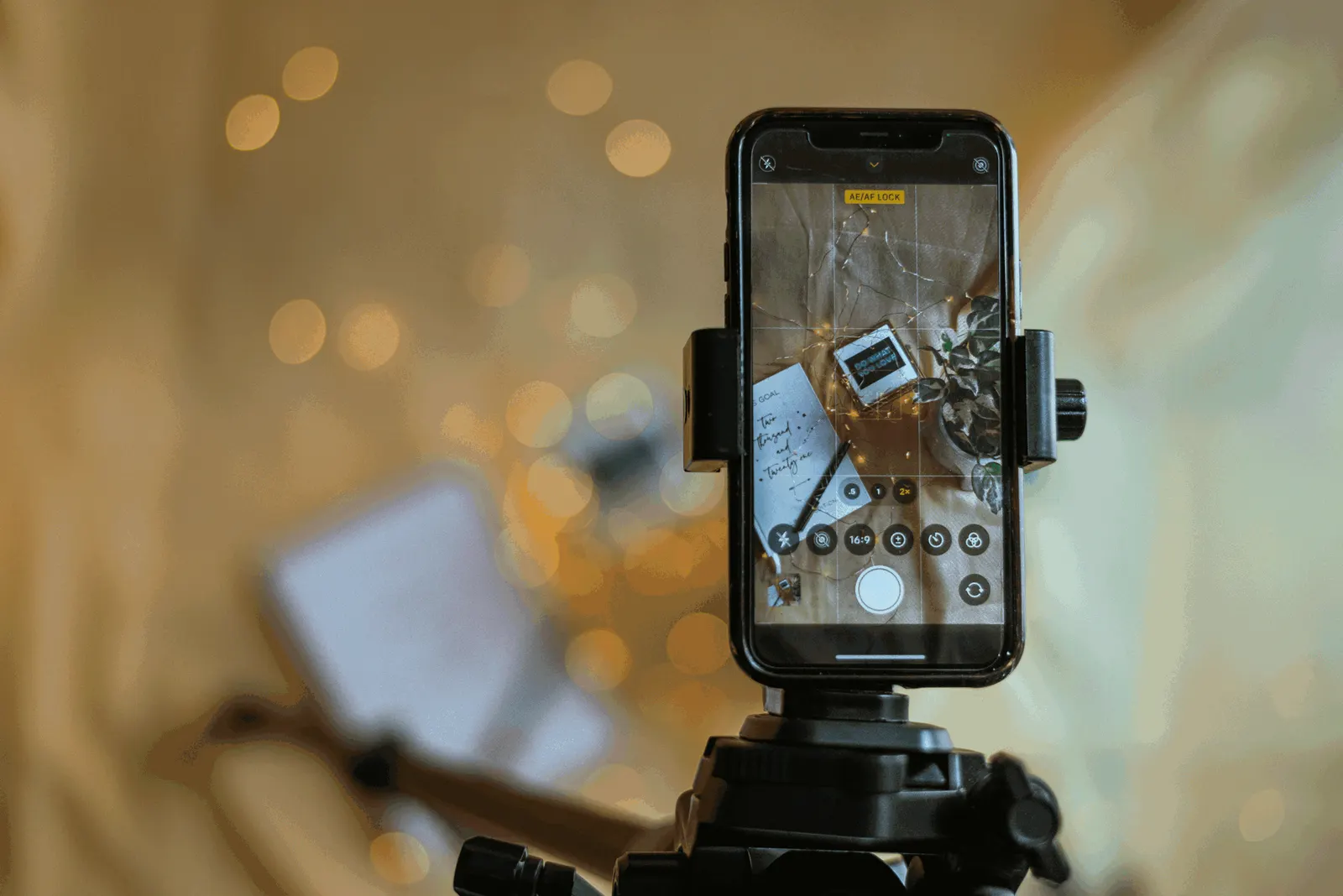
For light, all you need is a window in front of you, with your face turned towards it, instead of the ceiling light, which leaves shadows under your eyes, or a window behind you, which turns you into a dark shape against a bright background. Sound matters even more, because I watch with the sound on and hear everything, from the echo of an empty room to the fridge and music over your voice. Film in a room with curtains, rugs or clothes around you, which soak up the echo, with the window shut and the phone close to you.
Then I look for the product in your hand right at the start of the video, with the label facing the camera and held still long enough to read the name. I want to see you actually using it, the lid coming off, the cream on the back of your hand or the vacuum going over the rug, and since your hands are in almost every shot, clean hands and nails with nothing that pulls the eye away count for more than you'd think. It's the first proof that you can show a product to someone who's never held it.
Four to six videos, each one different
A portfolio with twenty face cream videos, all filmed at the bathroom mirror and all with the same opening, only tells me you're good at one thing. I'd rather see four to six videos, each in a different format and, if you can, with other products and in other places, because they let me picture you with the product in the next campaign, whether it's a serum or a frying pan. That's also how brands test ads, and TikTok itself tells them that, especially when testing, it's always better to use videos that are very different from one another. These are the four formats I most like to find:
- Testimonial: you talk about your experience with the product as if you were answering a friend who asked whether it's worth it.
- Unboxing: you open the parcel on camera and show what you take out of it, from the packaging to the product itself.
- Demonstration: you show the product up close doing the job it's made for, with your hands always in frame.
- Before and after: you film the same spot with the same light and from the same angle both times, with no filter changing the image between one and the other.
Practice videos count, if you say they're practice
It's normal for a portfolio to start with videos of products you bought or already had at home, filmed for practice, and that doesn't count against you with me. A well-made practice video shows me exactly what I need to know, which is whether you can film for a brand. What makes me close the portfolio is seeing those same videos presented as campaigns, with the brand's logo on a client list or a caption saying they were made for it, when the brand never ordered anything.
One question to the brand is enough to find out the truth, and once I doubt one caption I start doubting all the others. So write under each video what it is, with a simple label such as “Practice video”, “Product I bought myself”, “Product gifted by the brand” or “Made at the brand's request”, the last one only when that's really what happened. A creator who's clear about this shows me I can trust what they tell me in the middle of a campaign, and that trust counts for a lot when I'm putting someone forward to a brand.
The link, your contact details and what makes me move on
Put a single link in your bio and make it go straight to your portfolio, without passing through a menu with a dozen buttons: it can be a simple page, your own website or a Google Drive folder open to anyone with the link, as long as the videos play right there, without downloading anything or signing in. On your profile and in your portfolio, keep your email in view, along with the city you live in, the languages you film in and the kinds of product you're comfortable with, because a private message from me gets lost among all the others and a reply a week later comes too late for a campaign that's getting started. Before you send your link to anyone, open it in a private window and check it doesn't fall into any of these, which are what make me move on to the next portfolio:
- The bio link doesn't open, leads to an empty page or asks for access to the folder.
- The first video is the weakest, or isn't UGC at all, like a photo or an influencer-style post.
- The videos are horizontal, or the music is so loud your voice can't be heard.
- Beauty filters are changing your skin and face, so you can't see what the product does.
- I can't find your email or any other way to contact you anywhere.
None of this guarantees you a place in a campaign, mine or anyone else's, because the choice always depends on the product and on what the brand needs at that moment. What it does guarantee is that whoever opens your portfolio gets to the last video knowing what you can do, and that's what I need to know to think of you. Film the videos you're missing, give them the right labels and open your link again as if you were me.
Sources
Got all your videos behind a single link?
See how my network works